
Begin with the whole event
Your event starts before the first guest arrives and continues after the last one leaves. Vendors need access. Staff need instructions. Equipment needs to move. A useful security brief accounts for that whole sequence.
Start with a working plan that the venue, organizer, and security provider can review together. CISA’s Mass Gathering Security Planning Tool follows this collaborative approach, using event details and venue characteristics to support planning. The checklist below helps you organize the first conversation.
1. Put the event on one page
Write a short overview that someone outside your team can understand. Record the event’s purpose, the location, expected attendance, and whether access is open, ticketed, or invitation-only. Include the best current estimate when a detail is still being confirmed.
Add a schedule covering setup, staff arrival, doors opening, significant program changes, closing, and vendor departure. Mark any periods when several activities compete for the same entrance or space.
2. Walk the route your guests will take
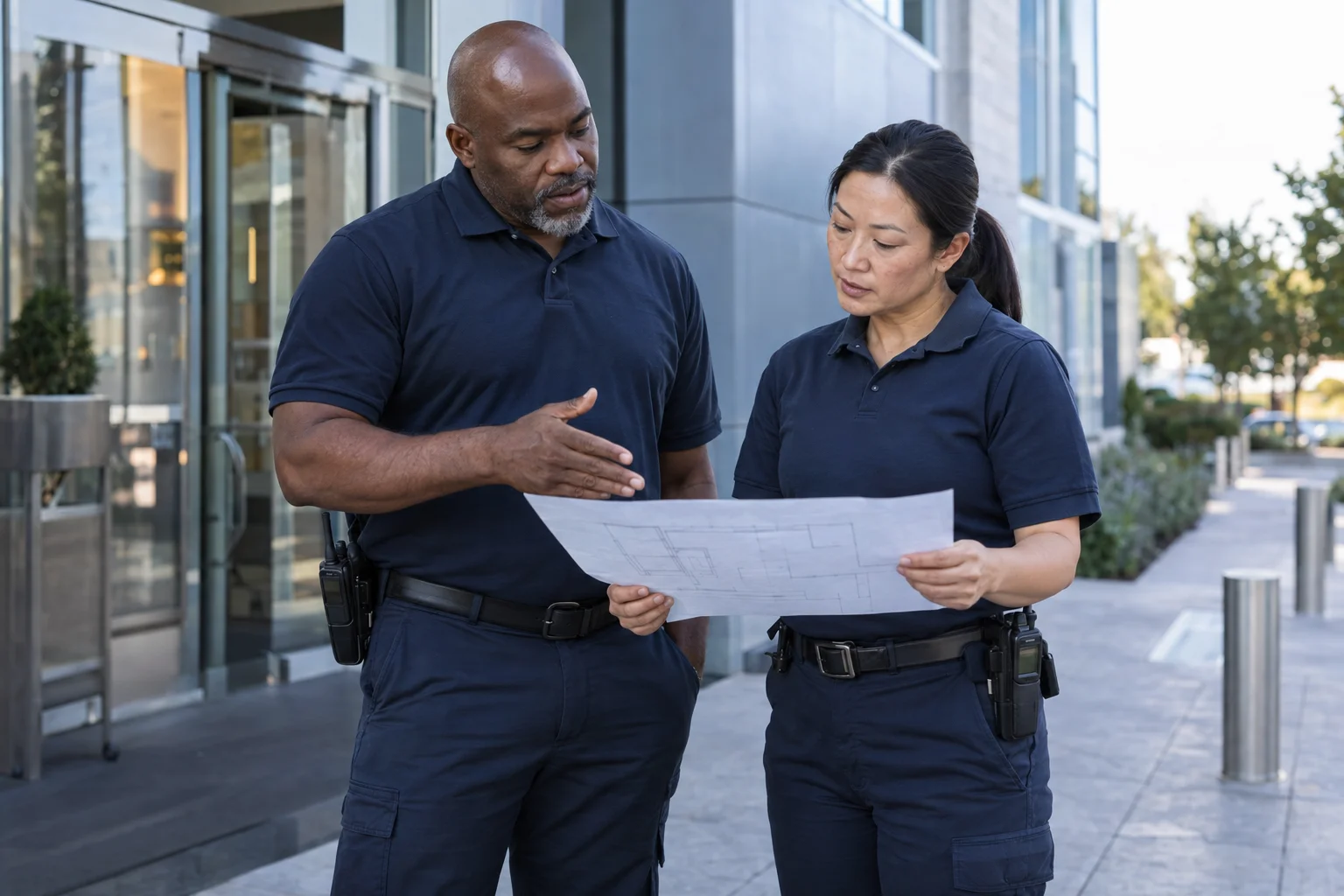
Review the journey from arrival to departure with the venue and provider. Look at where people wait, ask questions, meet friends, and cross paths with deliveries. Discuss how visitors with different access needs will use the space.
- Identify the agreed guest entrances and the staff or vendor access points.
- Mark reception, ticketing, restrooms, help points, and first-aid locations on the working map.
- Confirm how the plan preserves designated emergency access and exit routes.
- Note areas where signs or an informed person would make movement clearer.
3. Give each responsibility an owner
Write down who handles guest admission, vendor questions, venue decisions, security concerns, medical support, and changes to the program. Record a primary contact and a backup for each function.
Discuss the boundaries between event staff and security personnel. For example, who resolves a ticket discrepancy, who decides whether a vendor may use a different door, and who authorizes a change to the event schedule? Resolve these questions before the team is busy.
4. Agree on communications and escalation
Create a short contact sheet and a clear reporting route. Agree on the names used for entrances and event areas so a message points everyone to the same place. Confirm how staff report an issue and how the person receiving it acknowledges the message.
Discuss who can make urgent operational decisions, who contacts emergency services when needed, and who communicates instructions to guests. Align these arrangements with the venue’s established emergency procedures and the relevant event partners.
5. Brief and check before opening
Leave time for the security team to become familiar with the venue and the specific assignment. FEMA’s Special Events Contingency Planning guidance recommends briefing security personnel on the venue layout, assigned responsibilities, emergency procedures, and the communications plan and equipment.
- Review the latest schedule, map, contact list, and individual responsibilities.
- Check the agreed communication equipment and report faults.
- Confirm staffing handovers and breaks around the event’s busiest periods.
- Walk through a simple scenario, such as a delayed opening, to test who communicates with whom.
6. Plan the close, then capture the lessons
Give closing the same attention as arrival. Confirm who remains while guests leave, where vendors check in for removal, and who tells the team when the assignment is complete. Make sure any handover to the venue or overnight staff is explicit.
Afterward, hold a short debrief. Record what worked, what created confusion, and what should change next time. Assign an owner to each follow-up so the lessons become part of the next event’s plan.
Before opening, every key person should understand the schedule, the layout, their role, and how to get help. A concise plan that the team can use is a strong starting point for a coordinated event.
Start a conversation with SIA