
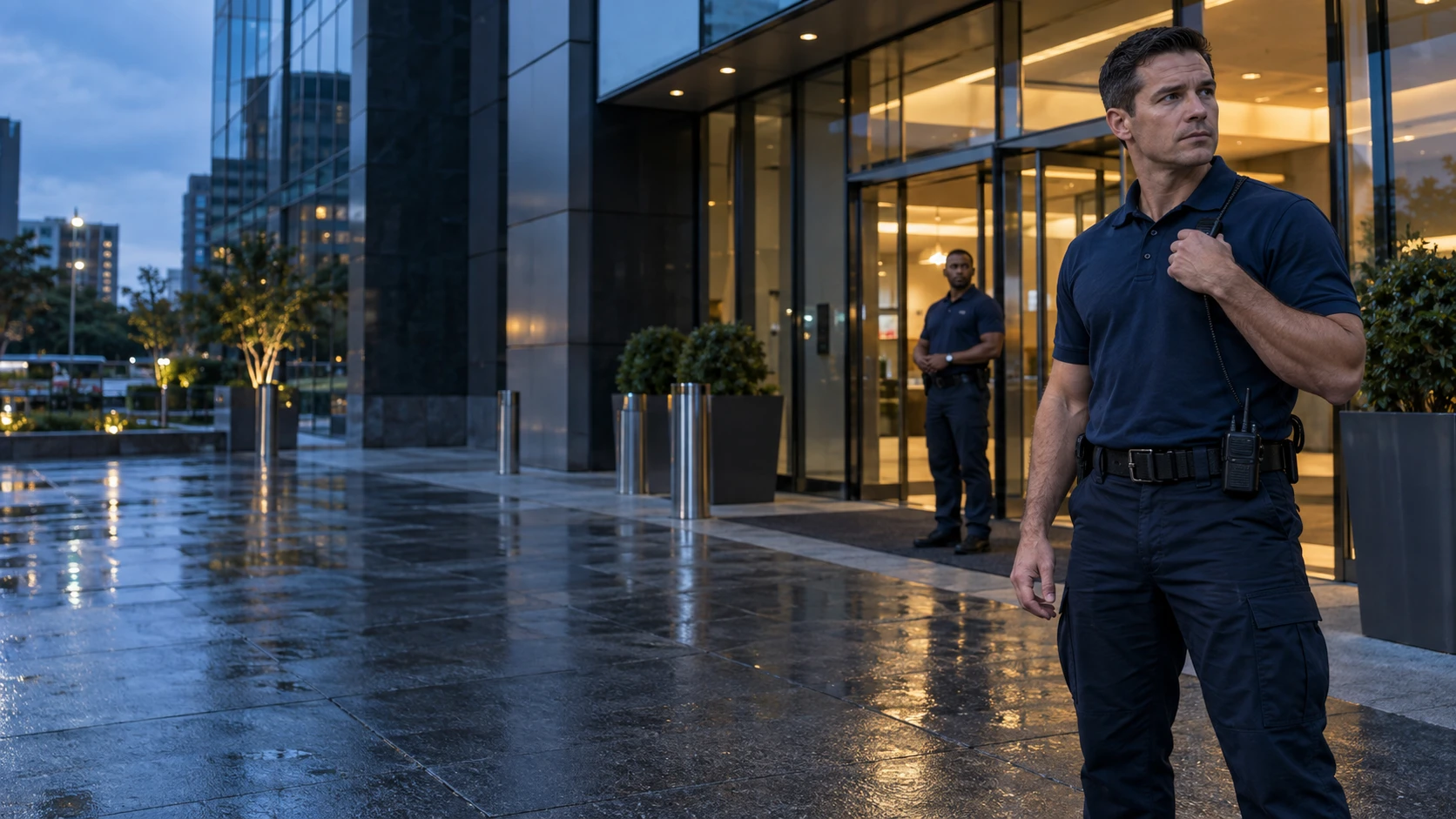
Start with the assignment
An armed assignment includes a firearm; an unarmed assignment does not. That distinction matters, but it does not describe the quality of the officer, the scope of the job, or the plan supporting the assignment.
Before requesting either option, write down what you want security to accomplish. Is the priority a welcoming presence at the entrance, help managing access, observation of a property after hours, or a response to a documented concern? A useful opening brief describes the setting and the problem. It gives a provider something concrete to assess.
What is happening at your property?
Separate known facts from assumptions. Record recent incidents, recurring access problems, operating hours, and changes that prompted the conversation. Include what happened, where it happened, and how your team handled it.
A busy reception area and a largely empty property at night create different assignments, even at the same address. Explain who is present during each period, who needs assistance, and where staff currently feel unsure about their responsibilities.
What should the officer actually do?
Describe the work in plain language. These questions can turn a broad request for protection into a usable scope:
- Will the officer remain at an entrance, move through the property, or divide time between agreed duties?
- Who approves visitors, deliveries, contractors, and access outside normal hours?
- What situations should be reported immediately, and who receives the call?
- What records should the officer complete and hand over?
- Which responsibilities stay with your employees, property manager, or event team?
How will the presence fit the people?
Security is part of how a place feels. Consider the experience of employees arriving early, a customer asking for directions, a delivery driver seeking the right entrance, or a resident returning home.
Ask how the provider would present the assignment: uniform, position, greeting, communication style, and approach to everyday disagreements. Discuss what armed coverage would mean in that environment. The conversation should explain the reasoning for the proposed approach and how it supports the people using the space.
What supports the officer?
Review the surrounding arrangements: working doors, lighting, visitor procedures, communications, and a reliable management contact. An officer needs clear instructions and a practical way to raise concerns.
Ask about site orientation, supervision, relevant training, replacement coverage, and the process for updating instructions. For an armed proposal, ask the provider to explain the assignment-specific requirements and supporting documentation. Resolve those details before agreeing to the service.
Can you compare proposals on the same basis?
Give each provider the same brief. Compare the proposed duties, hours, supervision, reporting, and assumptions alongside the price. Ask what is included, what requires separate agreement, and how a change in schedule or scope would be handled.
If one proposal recommends armed coverage and another recommends unarmed coverage, request the reasoning in writing. A useful explanation connects the recommendation to your circumstances. It should also identify what additional information or site review is needed to reach a sound decision.
How will you review the decision?
Set a review point before the assignment begins. Discuss what you will examine: completion of agreed duties, quality of reporting, communication with your team, and recurring issues that still need attention.
Choose a person who can receive feedback and approve changes. Keep a short record of decisions so the next conversation starts with evidence. Revisit the arrangement when occupancy, hours, access, or the nature of the concern changes.
Bring a clear description of your property, your concerns, and the work you expect. Ask the provider to explain how the recommended armed or unarmed assignment fits that brief, then agree on responsibilities and a review process.
Start a conversation with SIA